Startup founder and board & C-suite advisor helping teams use AI to cut supply chain risk and boost sustainability. Practical playbooks for culture change and measurable ROI.
I just came out of the AI Innovators panel at INSEAD’s AI Forum Americas in San Francisco. The message from the stage was clear: The barrier to AI adoption isn’t technology. It’s management.
All three said it in their own way: the models are ready. The math is cheap. The problem is us.
1. Most budgets are backwards
Sebastian didn’t mince words: “Budget 30% for development and 70% for change management.”
That’s the opposite of how most executives spend today. We still treat AI as an IT project when it’s actually an organizational transformation. Training, incentives, redesigning workflows — this is where adoption lives or dies. Ignore it, and your AI pilot ends up as another shelfware slide deck.
Most companies focus too heavily on building internal AI-powered tools, without considering the change management resources needed to ensure a successful implementation.
2. CFOs don’t care about your demo
The finance test is simple: show gains in the group that actually adopted your solution. Not promises. Not a POC. Cash in the bank.
If you can’t prove impact at the cohort level, you don’t have a business case — you have theater.
3. Move fast and DON’T break things
Gemma’s reminder: building fast is easy, integrating well is hard. AI projects crash when they move from prototype to production. The fix is discipline: break work into small tasks, measure what the AI touched, track how long it takes code to move from pull request to production. Ship small. Prove safe. Scale.
4. Quick wins and moonshots must coexist
Stephane compared AI to pharma: many bets, many failures, huge costs. The CFO wants a 90-day deliverable that proves value. The board wants a moonshot that reimagines the company in an AI-first world. You need both. Quick wins earn credibility. Moonshots earn the future.
5. Managers need a new job description
Hierarchies slow everything down. In an age of agentic AI, the manager role shifts. Less traffic cop, more architect. Their job: set guardrails, define success metrics, and remove blockers. Not “what did you do this week” but “what did the system learn and ship.”
AI thrives in flat teams. Hierarchies slow adoption, whereas architects and orchestrators speed it up.
6. Costs are collapsing, but value is elsewhere
The cost of running last year’s top model has already dropped by orders of magnitude. That’s not where the margin is. Value accrues at the solution layer — the companies solving painful, specific problems that users will pay for today. Infrastructure will be cheap. Adoption will not.
Takeaway
Most AI projects don’t fail in the lab. They fail in the org chart.
If you want to win with AI:
• Pick one workflow that matters.
• Prove adoption and cash impact in 90 days.
• Fund change management like you mean it.
• Run one moonshot in parallel.
• Redefine management around learning, not reporting.
The model race makes headlines. The culture race decides who survives.
About the Author:
Daniel Perry is a Silicon Valley-based start-up founder — and advisor to investors, boards & CEOs — connecting sustainability, technology & impact.
“One day the country could have a digital minister and even an AI prime minister” Edi Rama, Prime Minister of Albania
Albania just made history. It has appointed Diella, an AI‐created virtual minister, to oversee public procurement, a sector that has allegedly been long-accused of corruption and inefficiency.
What are the implications for procurement professionals, and how might this model spread to other bureaucratic roles?
What Diella tells us about procurement’s future
Objectivity & Transparency as Competitive Advantage – By shifting tender evaluations to AI, Albania aims to remove human bias, graft, and conflict of interest. For procurement professionals, this raises the bar: transparency isn’t optional. The value of clean data, well‐documented process, auditability will increasingly define who wins or loses — whether in government or private sector contracts.
Human Oversight Still Is, or Must Be, Critical – Diella isn’t (publicly at least) fully autonomous: questions remain about oversight, manipulation, legal liability. For procurement leaders, the takeaway is that AI can handle many procedural tasks, but designing how humans remain in the loop, how biases in training data are addressed, how exceptions are managed will be key responsibilities.
Procurement Becomes More Data‐Centric and Technical – Tender evaluation, risk scoring, supplier vetting, contract compliance — these will increasingly rely on algorithms, metrics, dashboards. Procurement professionals will need more fluency in data science, AI governance, process engineering. The role shifts away from paper chasing & negotiation toward strategy, oversight, and design of AI‐mediated systems.
Ethics, Trust & Reputation as Core Capabilities – The biggest risk may not be a technical failure, but rather, a loss of public trust. If an AI “minister” makes decisions that seem opaque, unfair, or wrong, the blowback could be severe. Procurement pros who build systems must embed ethical guardrails, fairness, explainability in their processes.
Extrapolating into Other Bureaucratic Roles
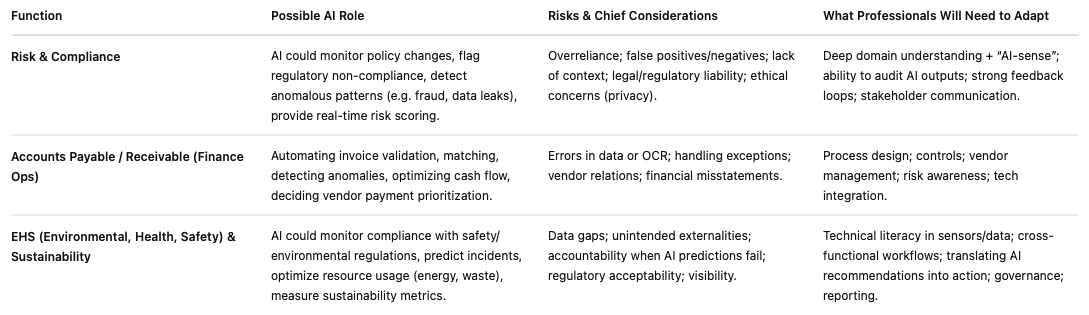
How this paradigm might map onto other functions.
What This Means for Procurement Professionals Right Now
Start experimenting with small, auditable, rule-based AI systems in your workflows (vendor scoring, supplier risk, contract compliance) so you understand strengths & pitfalls.
Build or sharpen skills in AI governance: fairness, explainability, bias mitigation.
Push for transparency: traceable decision logs, ability to contest AI decisions.
Engage legal/regulatory teams early: what are the boundaries of delegating authority to AI? What is the liability?
Cultivate stakeholder trust: employees, suppliers, customers all need to understand the “why” and “how” of AI decisions. Clear communication + good code.
Final Thought
Diella shows that traditionally slow-to-move organizations, like governments, are willing to hand over complex, rules-based processes to machines. The real work for professionals is deciding how much trust to place in those systems, and where human judgment still needs to apply.
For procurement professionals, that signal should stir both alarm and opportunity. Alarm, because the rules of procurement are being rewritten. Opportunity, because those who master these emerging rules — governance, transparency, data ethics, human-in-the-loop oversight — will set the standard.
For EHS and sustainability professionals, the opportunity is even larger. These are fields where data quality and reporting accuracy can mean the difference between regulatory approval or penalty, safe operations or an accident, credibility or greenwashing.
As AI takes on roles once thought uniquely human, our value will lie less in simply “doing our job” and more in ensuring that when AI does it, it does it better.
About the Author:
Daniel Perry is a Silicon Valley-based start-up founder — and advisor to investors, boards & CEOs — connecting sustainability, technology & impact.
This is a repost from November 28, 2017. Original article available here.
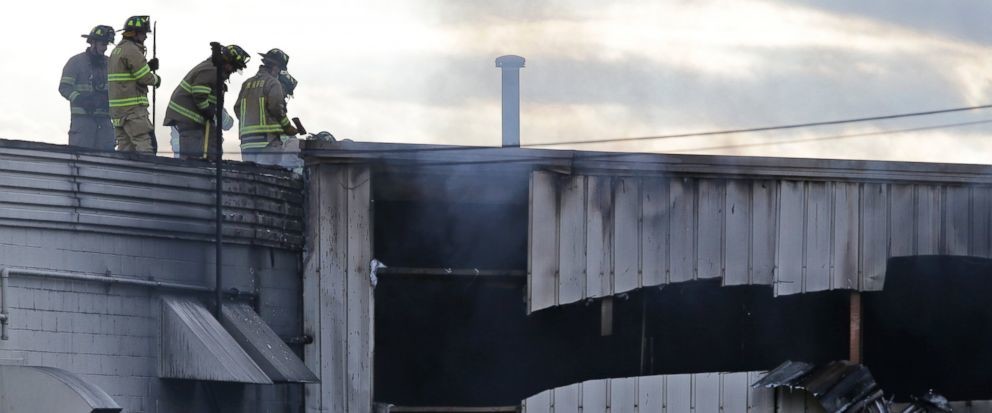
On November 20, 2017, New Windsor authorities say two explosions and a fire at a contract manufacturer in the Hudson Valley about an hour north of New York City left multiple people injured, including firefighters caught in the second blast. As of November 21, the tally was one man dead and 125 hurt after the deadly explosions.
Working in the sustainable procurement field, I try not to focus too heavily on sharing these horror stories. In fact, one of my favourite supplier sustainability stories revolves around another New York state contract manufacturer in the consumer goods space that avoided any such catastrophe, going from “Zero to Hero” in terms of their Environmental Health and Safety in a few short years. As I write this post from my company’s New York office, however, the avoidability of this tragedy and needless loss of life strikes frustratingly close to home and I feel compelled to share my views on this horrific disaster. When I first heard of this event, the questions that sprung to mind were:
1) Were any of the Supplier’s B2B customers aware of the level of risk to the factory workers?
2) If not, why not?
3) If so, why didn’t they act?
This event was brought to my attention because the company I work for, EcoVadis, provides corporate social responsibility ratings and monitoring of legal entities (most often ‘Suppliers’) on their environmental, social, ethics and supply-chain performance. In other words, EcoVadis could have picked up some of this particular plant’s gaps in management systems, or at bare minimum, the supplier’s 19 OSHA violations, had a client requested it.
“This tragedy could have been avoided, if only one of their B2B customers had used EcoVadis…”
Upon learning of the explosion and resulting fire, my first instinct was to share a quick one sentence post or tweet, with a link to the article, saying something like, “This tragedy could have been avoided, if only one of their B2B customers had used EcoVadis…”, but an opportunistic plug for my employer would have been missing the point entirely… Assessments don’t save lives, action does… While an EcoVadis assessment could have told the Supplier (and their B2B customer) what the problems were and what the Supplier could have done to improve, in the case of this particular Supplier, they were already well aware of what the problems were (19 OSHA violations and fines of totalling $60,421 are a testament to this). Ultimately the risk/reward was such that, for whatever reason, the Supplier chose not to act. Saving lives requires action, and if there was anyone who could have saved lives in this scenario, it was their B2B customers. $60k in fines may not have moved the needle with this Supplier, but I bet millions of dollars in potential lost revenue could have.
So where is Procurement in this tragedy? Did they have the resources at their disposal to drive tangible improvement in working conditions and yet choose not to use them? What would have been Procurement’s motivation to look into this supplier in the first place? We may never know. By now their customers have likely already hit the ‘panic button’, scrambled to find an alternate/interim supplier, cut their losses and moved on. Perhaps the Supplier’s B2B customers had the resources to drive improvements, but chose instead to focus their attention on other suppliers perceived to be of higher risk…
companies take responsible sourcing seriously – but only in developing countries
As more and more production is moved offshore to countries like China, the focus of supplier vetting and due diligence tends to be offshored as well. Scandals involving product quality, environmental impacts, and modern slavery ensure companies take responsible sourcing seriously – but only in developing countries. In North America, it seems, the law of the land is seen as ample protection from supply-chain disruption, and as such, North American suppliers are being treated as ‘low-risk’, which ultimately leaves them off the hook in global responsible sourcing programs.
“There are good suppliers in ‘risky’ countries and risky suppliers in ‘good’ countries”
As cases like this highlight, however, assuming North American suppliers are “safe” and Chinese suppliers are ‘risky’ is not a sustainable long-term approach. As a Responsible Sourcing professional once told me, “There are good suppliers in ‘risky’ countries and risky suppliers in ‘good’ countries”. In other words, a supplier’s factory’s geographic location is not a proxy for risk. Due diligence must be undertaken by procurement with all suppliers on an ongoing basis – regardless of geographic location – and those suppliers need to know that buyers truly care about the safety of factory workers and want to see their continuous improvement!
Care (and duty thereof) is the key here, because to mitigate the likelihood of avoidable disasters and tangibly improve the environmental health and safety of workers, it’s going to require that CPOs genuinely care about their Suppliers’ CSR & Sustainability on the front-end (not after-the-fact), and stop treating it like a ‘check the box’ exercise for geographically ‘at-risk’ suppliers.
In Summary
This tragedy was avoidable.
CPOs need to take ‘responsible sourcing’ and ‘sustainable supply-chain’ initiatives seriously and globally (and ‘globally’ includes North America).
Category Managers must put non-financial performance as the first KPI on the list (above Cost, Quality, and On-Time Delivery).
Sourcing Directors must include Corporate Social Responsibility in RFPs and ensure suppliers are incentivized to improve on an ongoing basis.
As US Federal regulations drop like Fall leaves, it’s up to Procurement to fill the due diligence void left behind by motivating suppliers to maintain the highest of standards, benchmarking their suppliers against global best practice, and rewarding those suppliers that go ‘beyond-compliance’. Corporate-led multi-stakeholder industry initiatives may also help (such as the Responsible Beauty Initiative that launched in November 14, 2017). While due diligence with suppliers in emerging markets will always be a necessity, it should never be at the expense of the wellbeing of workers and their families in the buyer’s backyard.





 Daniel Ross Perry