
This is a repost from July 10, 2017. Original post can be found here.
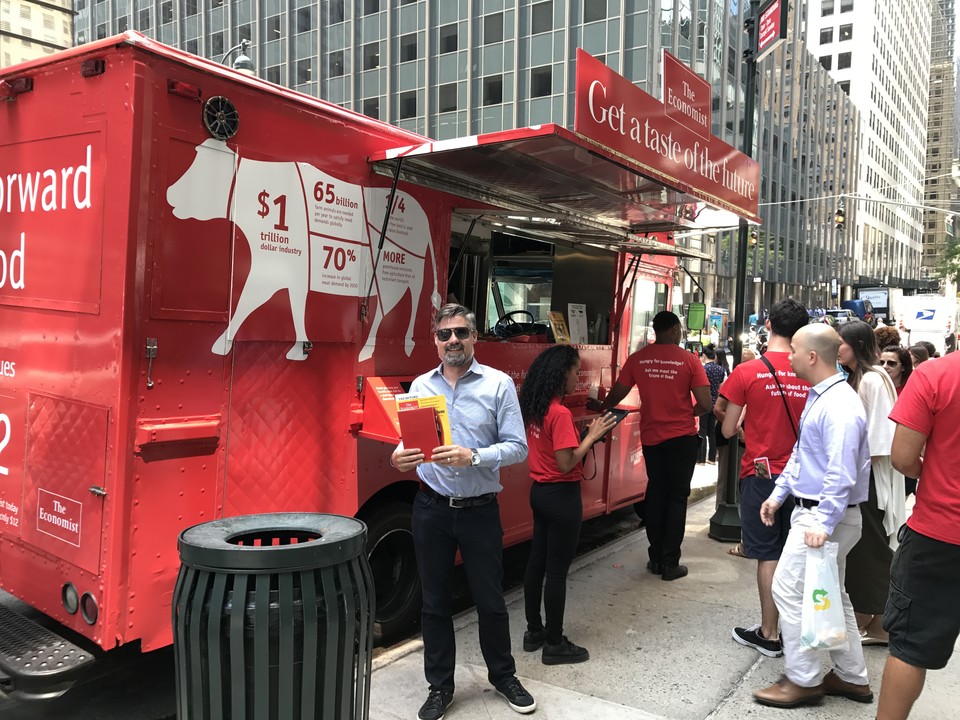
This is the smartest marketing campaign I’ve seen recently. Effortlessly combining Mission, Education, Call to Action, and Sale is no easy task, and The Economist has managed to pull it off with flair.
I think this image of me holding my new copy of the weekly magazine, along with a “free” Moleskine® inspired notebook, speaks volumes about how The Economist has managed to corner a significant demographic (Manhattan-based New Yorkers, hungry enough to eat anything from a street-vendor, and willing to listen to a sales-pitch for free food).
However, a quick search of the campaign hashtag #feedingthefuture on LinkedIn revealed a more eloquent summary of the marketing genius at play:
This campaign, while not, it seems, aligned with any non-profit or charitable organization, promotes education, through common experience (i.e., eating food, drinking coffee), of an issue that warrants substantially greater public attention. How can the public learn more about the staggering cost of food waste, both economically and environmentally? By reading things like The Economist. It works. – Daniel DioGuardi
In any case, the half-burger was great, and while not enough to satisfy, (thank you eatsa for providing the rest of my lunch), I am now interested to learn more about plant-based protein, and meat-alternatives… plus I’m a now subscriber to The Economist for at least the next 12 weeks.
I’m in New York City this week, representing EcoVadis at a workshop at the United Nations Headquarters during the UN High Level Political Forum (HLPF). The workshop, titled “Business Leading the Way: The SDGs as a Tool for Sustainability and Growth”, has been co-organized by the UN Department of Economic and Social Affairs (UNDESA), the Sustainable Development Fund (SDGF), and the United Nations Institute for Training and Research (UNITAR), with the generous support from EcoVadis.
 Daniel Ross Perry