Startup founder and board & C-suite advisor helping teams use AI to cut supply chain risk and boost sustainability. Practical playbooks for culture change and measurable ROI.
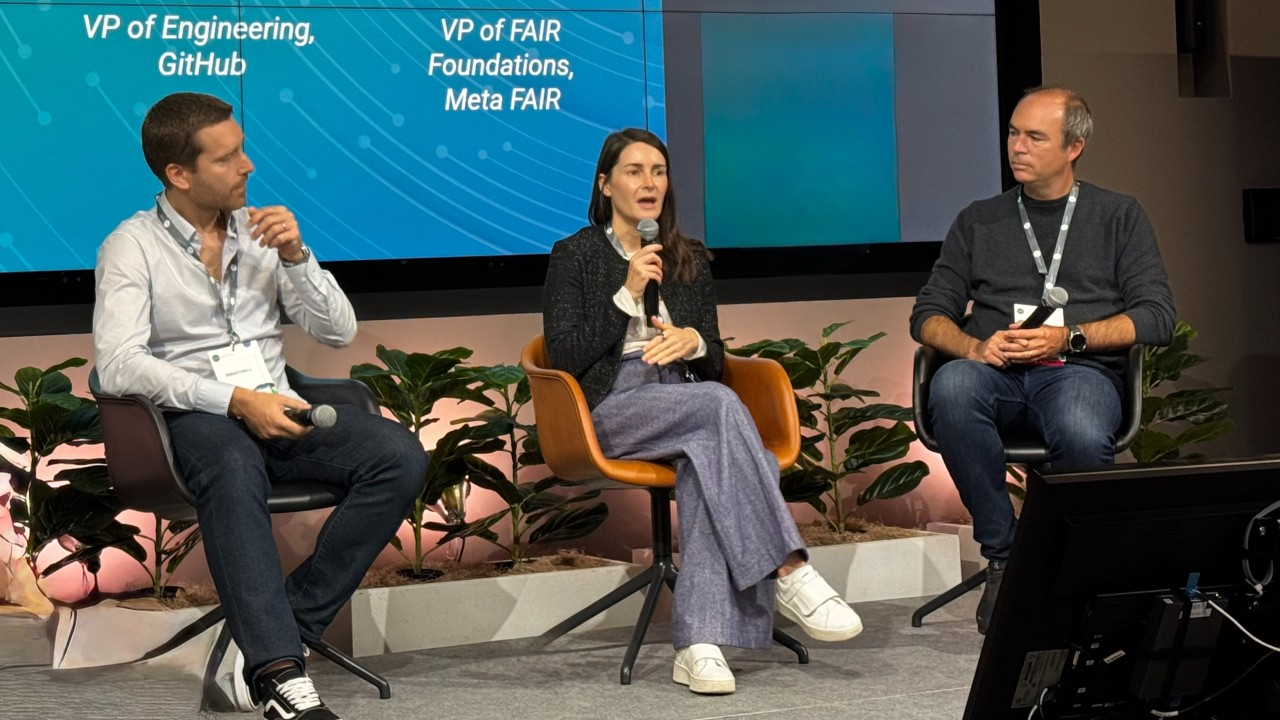
I just came out of the AI Innovators panel at INSEAD’s AI Forum Americas in San Francisco. The message from the stage was clear: The barrier to AI adoption isn’t technology. It’s management.
All three said it in their own way: the models are ready. The math is cheap. The problem is us.
1. Most budgets are backwards
Sebastian didn’t mince words: “Budget 30% for development and 70% for change management.”
That’s the opposite of how most executives spend today. We still treat AI as an IT project when it’s actually an organizational transformation. Training, incentives, redesigning workflows — this is where adoption lives or dies. Ignore it, and your AI pilot ends up as another shelfware slide deck.
Most companies focus too heavily on building internal AI-powered tools, without considering the change management resources needed to ensure a successful implementation.
2. CFOs don’t care about your demo
The finance test is simple: show gains in the group that actually adopted your solution. Not promises. Not a POC. Cash in the bank.
If you can’t prove impact at the cohort level, you don’t have a business case — you have theater.
3. Move fast and DON’T break things
Gemma’s reminder: building fast is easy, integrating well is hard. AI projects crash when they move from prototype to production. The fix is discipline: break work into small tasks, measure what the AI touched, track how long it takes code to move from pull request to production. Ship small. Prove safe. Scale.
4. Quick wins and moonshots must coexist
Stephane compared AI to pharma: many bets, many failures, huge costs. The CFO wants a 90-day deliverable that proves value. The board wants a moonshot that reimagines the company in an AI-first world. You need both. Quick wins earn credibility. Moonshots earn the future.
5. Managers need a new job description
Hierarchies slow everything down. In an age of agentic AI, the manager role shifts. Less traffic cop, more architect. Their job: set guardrails, define success metrics, and remove blockers. Not “what did you do this week” but “what did the system learn and ship.”
AI thrives in flat teams. Hierarchies slow adoption, whereas architects and orchestrators speed it up.
6. Costs are collapsing, but value is elsewhere
The cost of running last year’s top model has already dropped by orders of magnitude. That’s not where the margin is. Value accrues at the solution layer — the companies solving painful, specific problems that users will pay for today. Infrastructure will be cheap. Adoption will not.
Takeaway
Most AI projects don’t fail in the lab. They fail in the org chart.
If you want to win with AI:
• Pick one workflow that matters.
• Prove adoption and cash impact in 90 days.
• Fund change management like you mean it.
• Run one moonshot in parallel.
• Redefine management around learning, not reporting.
The model race makes headlines. The culture race decides who survives.
About the Author:
Daniel Perry is a Silicon Valley-based start-up founder — and advisor to investors, boards & CEOs — connecting sustainability, technology & impact.
This is a repost from March 7, 2019. Original article available here.
EcoVadis Releases UN Global Compact Performance Report
Study finds that organizations that have committed to the UNGC’s ten principles perform significantly better on sustainability measures throughout supply chains
PARIS and NEW YORK — (March 6, 2019) — EcoVadis, the world’s most trusted provider of business sustainability ratings, has published a new report on sustainability performance comparisons between organizations who have committed to the UN Global Compact principles vs. those that have not. Taking a deep dive into performance across key themes of Environment, Labor and Human Rights, Business Ethics and Sustainable Procurement, EcoVadis found that committed companies perform better across their supply chains.
“We assess nearly 20,000 companies a year on their sustainability performance and this report specifically explores the link between the adoption of the Ten Principles of the UN Global Compact and advanced sustainability performance,” said Sylvain Guyoton, SVP of Research at EcoVadis. “We found encouraging evidence that companies who adopted the UN Global Compact Principles are stepping up to the challenge — mitigating CSR risks within their operations and moving the needle to a more sustainable future.”
The report’s major takeaway:
Companies committed to the UN Global Compact principles have on average better sustainability performance: The findings demonstrate a clear correlation between advanced CSR performance and UN Global Compact participation. That said, participation in the UN Global Compact does not lead to advanced CSR performance in and of itself;
Among UN Global Compact participants, small and medium-sized companies demonstrate better performance compared to large ones. This may be due to the fact that small- and medium-sized companies can act faster when addressing CSR issues.
Companies perform significantly better in labor & human rights and environmental themes, compared with the ethics and sustainable procurement themes.
Sustainable Procurement and environment themes have the greatest gaps between UN Global Compact participants and nonparticipants. This gap may be linked to the need for explicit executive level commitment to make investment in environmental and sustainable procurement programs. Such commitment is a clear and deliberate part in UN Global Compact participation, and thus explains the higher performance of UN Global Compact participants.
“We must achieve the Sustainable Development Goals — for our own sake and for future generations,” said the CEO and & Executive Director of the UN Global Compact Lise Kingo. “More and more businesses are supporting the Global Goals, and now we must drive for the tipping points that will make sustainability a mainstream reality for small and large businesses everywhere. It is encouraging to see that our Ten Principles on human rights, labor, environment and anti-corruption are helping companies to improve their sustainability performance.”
To learn more about the UN Global Compact and their various signatories, download the full report.
This is a repost from August 14, 2017. Original article can be found here.
I was honored to have the opportunity to speak at the United Nations Headquarters recently. To be invited into the hallowed halls of the UN, walking past portraits of global leaders and heroes, you get a sense of the seriousness of the institution and the gravity of what is at stake.
Inside what seemed like a “War Room“, with business, government and non-government organizations well represented, the tone was at times fittingly combative.
The day kicked-off with an (unintentionally intense) introduction from Nikhil Seth Executive Director of UNITAR and Paloma Duran Director of the SDG Fund. After cordially introducing the day’s events, the floor was open for a few questions from the attendees, (typically reserved for obligatory house-keeping questions, or a few soft open-ended questions about the state of “international progress”). The invitation for questions resulted in a European government representative challenging the sustainability (and therefore integrity) of the intergovernmental organization’s funding sources, leaving the panelists to calmly refer the attendee to anecdotal evidence of the vetting process for accepting funds from corporations. Good to know, but not exactly the “we can do this” kind of attendee engagement anyone was expecting.
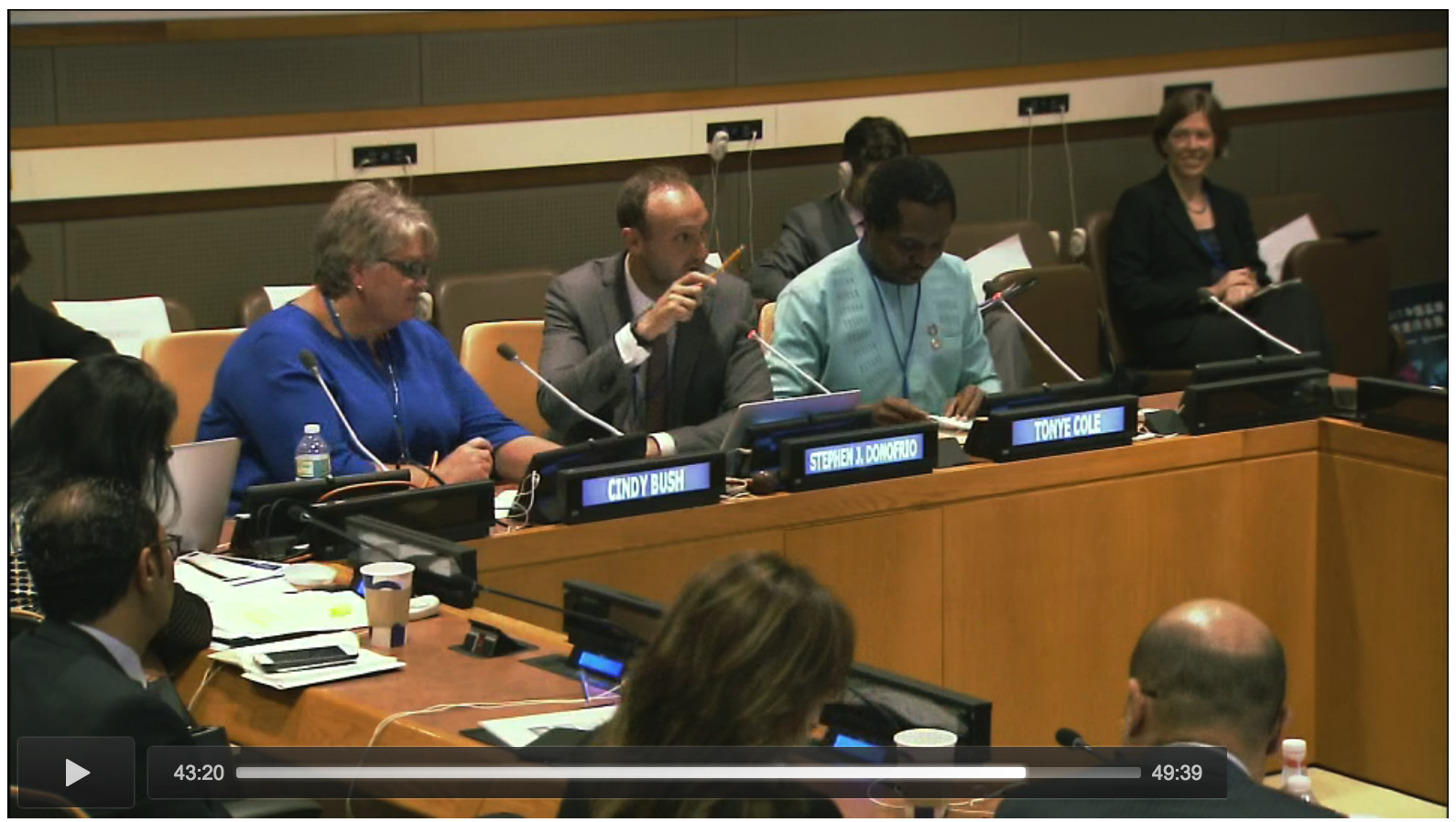
The moderator for the second session, Stephen J. DonofrioSenior Advisor for Supply Change atForest Trends Initiative, promised a more interactive session featuring suppliers discussing “how to initiate and sustain internal processes and initiatives”. The panel featured two distinctly different perspectives, with Tonye ColeCEO of the Sahara Group, a large Nigerian private energy company, and Cindy Bush Director of Environmental Health and Safety and Sustainability at Tessy Plastics Corporation, a family owned and operated contract manufacturer headquartered in central New York.
Mid-way through the presentation, it was apparent that doing business in both the energy and the plastics sectors are inherently challenging, with some attendees wasting no time shedding light on some of those challenges – asking how the panelists intend to tackle regional social issues, what they are doing to drive eco-friendly initiatives and how they navigate volatile political climates while maintaining corporate and social integrity.
While Donofrio was able to calmly collate the various (and sometimes lengthy) questions into succinct inquiries that Tonye Cole and Cindy Bush could deftly navigate, it started to seem like the attendees may be left with more questions than answers, and the task of figuring out how businesses can save the world from environmental and social disaster, was at best looking elusive.
Then somewhere near the end of the session, Cindy Bush answered a question which inadvertently provided a master-class in storytelling, while allowing the attendees the opportunity to pivot from “Us & Them” to simply “Us”.
Cindy was asked to comment on a major barrier to businesses leading the way: Large companies are often hesitant to roll-out supply chain sustainability programs because they think small suppliers are either unprepared or unwilling to participate.
“… I really didn’t know what I was doing five years ago… But, failing their survey was one of best things to EVER happen to our company.” – Cindy Bush, Tessy Plastics
What are we talking about?
Cindy started by clearing the air and explaining the topic, “sustainable procurement”, and what it means, as it relates to her customers, “…We’re a tier one supplier for large OEMs, and they have some requirements for their suppliers, (and they articulate them quite well), and our duty, as a supplier, is to try to figure out how to take their aspirations, and put them into practical day-to-day operations and actions.”
Then she clarified what sustainable procurement means in the context of her own supply base, “… because we know what is required and what our customers are asking of us… one of the key things that we’ve learned… is how to take take what’s been required of us, and then turn around and “softly” require it of others… “
Make it Personal
With the topic crystal-clear to everyone, Cindy humanized the challenge faced by many organizations, dispelling any potential cynicism toward her sincerity, by sharing an unguarded moment: “[J&J] gave us the EcoVadis assessment and survey, which has served as a guide-post for the development of our program… I actually find myself getting choked up when I think about it because… I really didn’t know what I was doing five years ago. I told you the truth right? But failing their survey was one of best things to EVER happen to our company.”
Back it up with Data
Many speakers before and after had fantastic data, and solid business cases, but the reason Cindy was so persuasive is that she kept the data in her pocket until the audience was ready. Only once the attendees were fully-engaged, did Cindy hit them with the hard facts. Explaining why failing the assessment was the best thing to ever happen to her company, she continued, “… and here’s how I know it to be true. [At] the same time that we did not do well on our first EcoVadis score, we were only 300,000 square feet, we barely had 400 employees and profit sharing in a quarter was fifty dollars.”
“[Five years on,] now we’re 1.5 million square feet, we deal with some of the largest OEMs in the world, and we have tripled, (if not more), our profitability. All [while] at the same time, (which is not lost on all of you), we kept our eye on the prize – We got real about our responsibilities, we understood how to make and have less impact on the environment, the world, and have a positive impact on our employees.”
The Result
Cindy’s response blew everyone away – In a few short minutes she managed to eloquently demonstrate the important role her customer, Johnson & Johnson, played by inviting Tessy Plastics to participate in a Sustainability Rating program, the significant business benefits Tessy received by participating, the correlation between sustainability and profitability, and the positive flow-on effects corporate social responsibility can have when applied to the context of a multi-tier supply chain.
Cindy’s response was authentic, engaging, and relatable, but it also had the unintended effect of refocusing and uniting the attendees. There was a palpable enthusiasm and freedom to be authentic, which gave attendees and panelists liberty to openly communicate on challenges and successes alike.
In the space of one session, (and arguably the length of one story), the atmosphere had transformed from a combative collective of competing interests, to that of a collaborative group of diverse stakeholders ready to tackle the world’s biggest challenges.
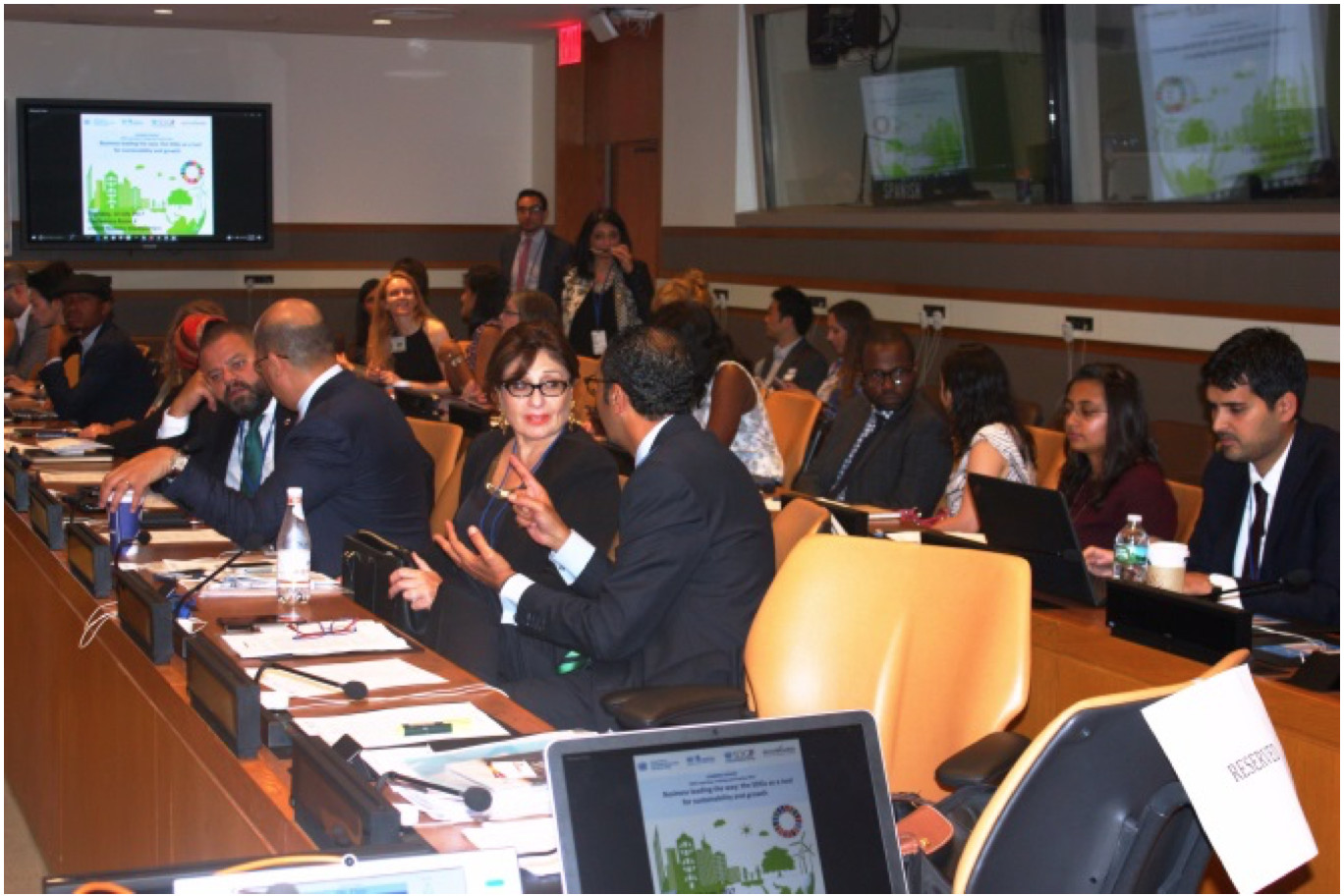
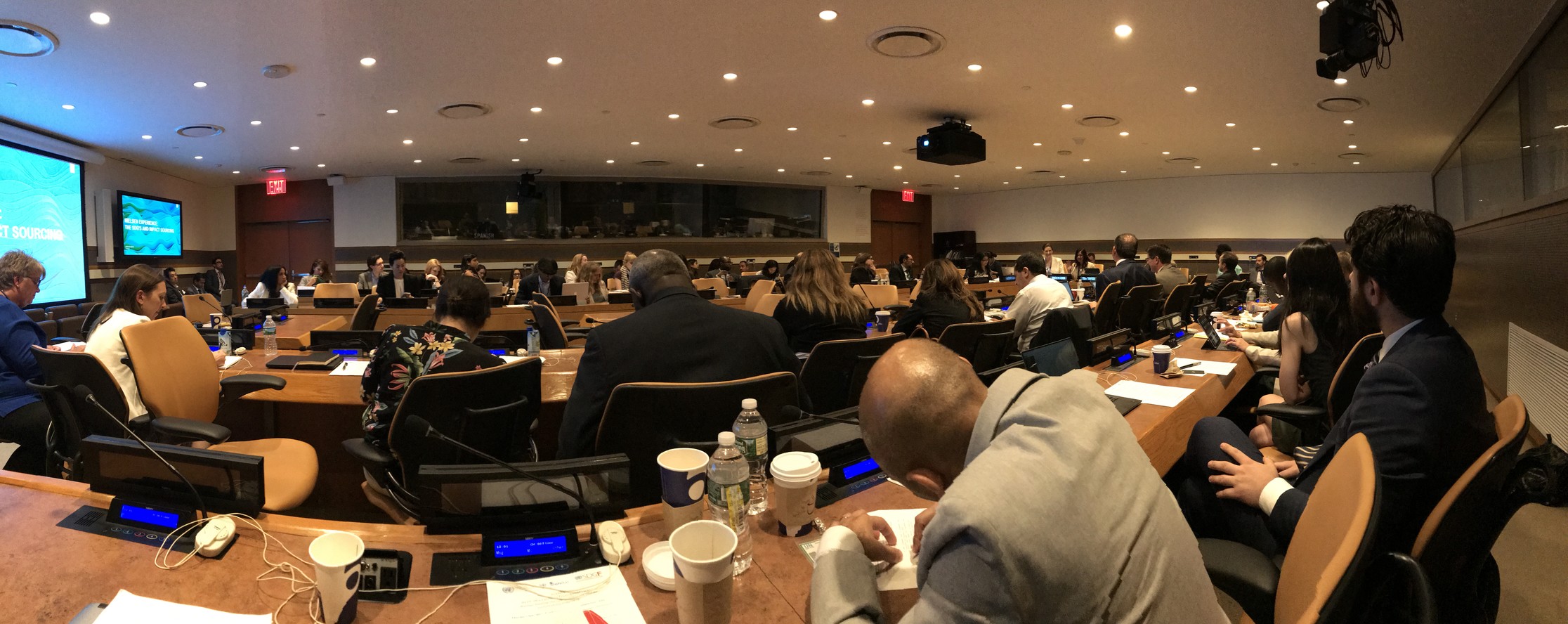
(My view during Training Session 3 SDGs and the role of the Supply Chain)
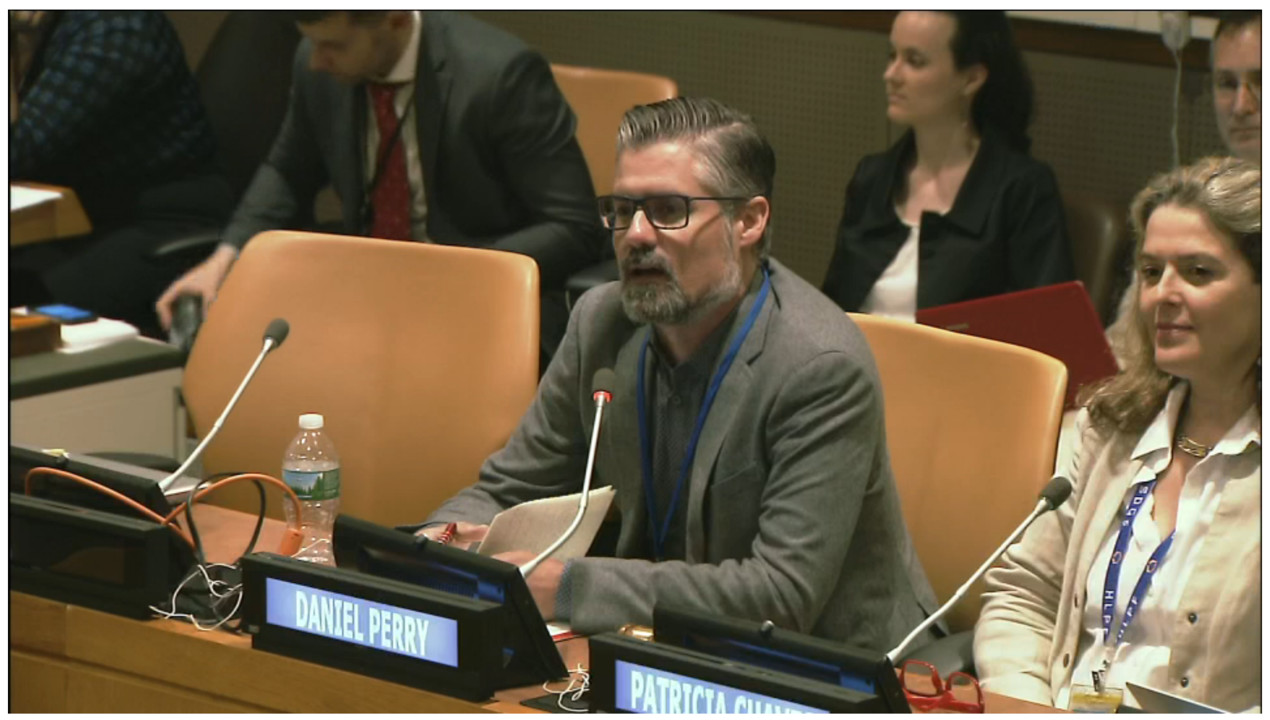
By the time I was called upon to introduce the “Closing – Inspirational Recap” speakers, Evan Harvey Global Head of Sustainability at NASDAQ,Patricia Chaves Senior Sustainable Development Officer at the United Nations Division for Sustainable Development (UNDESA), and myself, it was almost impossible to bring order to the group, as they were (dare I say) having too much “fun”. Maybe that’s a stretch, but there was definitely “collective excitement”, with attendees sharing ideas with their newly acquainted peers. Certainly not a bad level of engagement for 6PM on a weekday, after spending an entire day locked in a bunker.
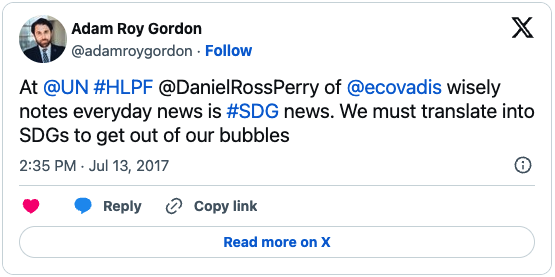
The wrap-up session provided Evan Harvey an opportunity to show why he is a sought-after sustainability thought leader, effortlessly relaying relatable case studies of SDG-inspired sustainability success. Patricia Chaves took the opportunity to challenge the attendees to take the SDGs back to their workplace, stay engaged throughout the coming 12 months, and return with stories of progress. Finally, I challenged the attendees to be “translators” of the SDGs, and was happy to provide an answer to the last tricky question of the day, as it gave me an opportunity to talk about a topic I care about a great deal.
All told, I found this to be a truly inspiring event, thanks in no small part to the story relayed by Cindy Bush, which set off a chain reaction of compelling discussion (that we’ll all be striving to ensure leads to progressive action).



 Daniel Ross Perry