The Doorman Fallacy: What Organizations Get Wrong About Value

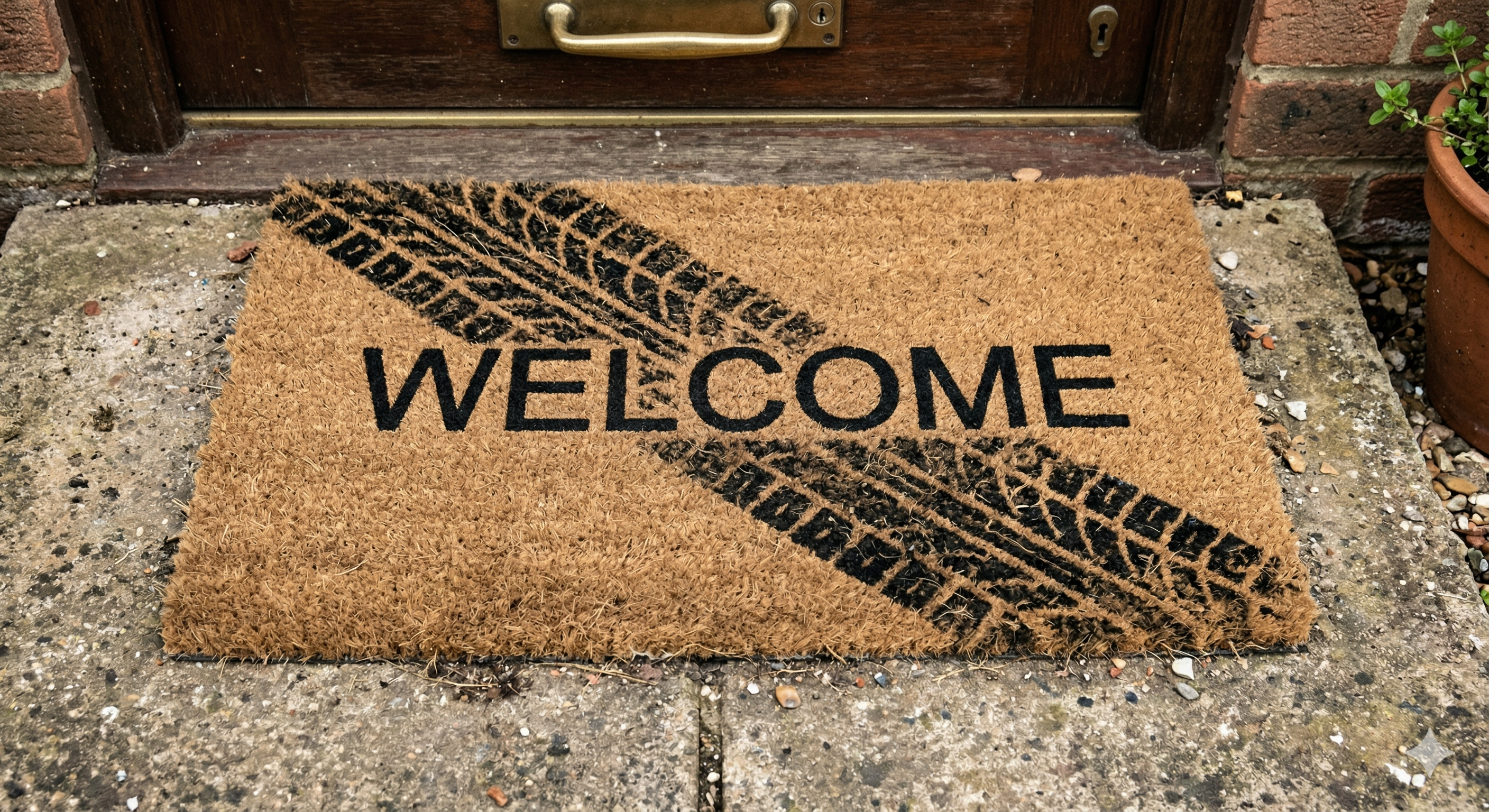
A welcome doormat with tire tracks crossing it — illustrating the Doorman Fallacy

The price we all pay when a spreadsheet is at the wheel.

Picture a fancy New York hotel — the kind you’d see in a Christmas movie. Now ask yourself: when is the last time you actually encountered a doorman?

Doormen, once a fixture of high-end hospitality, have been systematically replaced by automated sliding doors. On a spreadsheet, the logic is airtight. A sensor and a motor cost less than a salary. The door still opens. Problem solved.

Except the door was never the point.

The Doorman Fallacy

Marketing strategist Rory Sutherland, Vice Chairman of Ogilvy, calls this the Doorman Fallacy. Strip a doorman’s role down to its single measurable function — opening a door — replace it with automation, and record the savings. The spreadsheet shows a win.

What disappears from the spreadsheet: the security the doorman provided, the recognition of returning guests, the subtle signal that you are not just expected, you are welcome. Strip that out and you don’t just lose a doorman. You lose consistent-paying regulars, your rack rates fall, and five years later you’re sitting on an unprofitable piece of real estate.

As Deming put it: “It is wrong to suppose that if you can’t measure it, you can’t manage it — a costly myth.”

Sutherland argues that the same logic is now being applied to AI. The easiest way to justify an AI investment is headcount reduction. So that’s how it’s being sold — not as a tool for generating new value, but as a tool for cutting existing cost. The first phase: “Same as before, but cheaper.”

The Alchemist vs. The Accountant

For the past decade, the Chief Sustainability Officer operated as a strategic alchemist. Their mandate was to find the intersections where social impact and long-term business value collided — proving that doing better and growing faster were not in conflict. At its best, the annual sustainability report attracted high-conviction capital, restless talent, and partners who wanted to build something lasting.

In 2026, the Alchemist has been replaced by the Accountant.

By moving sustainability under the CFO, the brief has narrowed from “How do we change the world?” to “How do we avoid a fine?” The goal is no longer to be bold — it’s to be invisible. Report accurately against mandatory frameworks. Don’t miss a deadline. Don’t expose the company to regulatory risk.

The result is “green-hushing”: the corporate equivalent of Schrödinger’s ESG. The company might be doing something good, but it’s too terrified of putting a foot wrong with the regulators to tell anyone about it.

This restructure is entirely defensible on paper. Mandatory reporting is real, and putting a finance professional in charge of compliance risk makes sense. But this is the Doorman Fallacy applied to the soul of the company. Just as a sensor can technically open a door, a compliance officer can technically manage sustainability. What you lose — and what never appears on the same spreadsheet — is the accumulated erosion of the intangible. You’ve traded a magnet for talent and a driver of innovation for a defensive shield. You’ve managed the risk, but in doing so, you’ve quietly strangled the reward.

A Formula for Failure

If you need a more visceral illustration of the Doorman Fallacy in action, look no further than Aston Martin’s 2026 Formula One season.

F1’s 2026 regulation cycle introduced the most radical power unit change in a generation — a shift from an 80/20 ICE/hybrid split to 50/50. Aston Martin owner Lawrence Stroll saw this as an opportunity. He acquired Adrian Newey — the greatest aerodynamicist in the history of the sport — and gave him the keys to the entire operation, appointing him Team Principal.

The results have been catastrophic.

The car arrived at testing requiring immediate, extensive modifications. The Honda power unit produces vibrations so severe they’re damaging components and causing nerve pain in the drivers. The team accumulated less than half the mileage of top competitors in early testing. Newey has publicly blamed everyone else — Aston Martin for not hiring him sooner, Honda for not staffing the project with his preferred engineers.

The lesson is sharp: Newey’s genius is real and measurable. His track record is extraordinary. But leading 800 stressed humans, managing critical partnerships, and navigating intense media scrutiny during a technical crisis doesn’t show up on a résumé or a CAD blueprint. Stroll hired the world’s most advanced automatic door and asked it to act as the hotel doorman.

What This Means for Your Organisation

The tragedy of the “high IQ, low EQ” organisation is that it believes it is being rigorous when it is actually being lazy. It is far easier to measure the cost of a person than the value of their presence.

The antidote isn’t to abandon measurement. It’s to invest equally in what Sutherland calls the Unmeasurable Multipliers:

The Power of the Symbolic. Doing things that don’t “scale” — precisely because they signal to customers and teams that you care about more than just the bottom line.

The ROI of the Irrational. Investing in “psychological moonshots” — the doorman, the charismatic leader, the bold sustainability goal — that create a halo effect far beyond their functional utility.

The Human Edge. In an AI-driven world, “average” is now free. Anything standard, logical, or fully optimised carries zero competitive advantage. Value lives exclusively in the outliers — in the things only a human would be bold enough to attempt.

The doorman didn’t just open a door. He signalled that the building was worth entering.

Perhaps we should stop asking “What does this cost?” and start asking “What does this mean?”

In 2026, the most successful organisations won’t be the ones with the best spreadsheets. They’ll be the ones who remembered that business is, was, and always will be, a social science — not a branch of physics.
The Doorman Fallacy: What Organizations Get Wrong About Value

AI’s Biggest Challenge Isn’t Compute. It’s Culture.

Most AI projects die deep in the org chart.

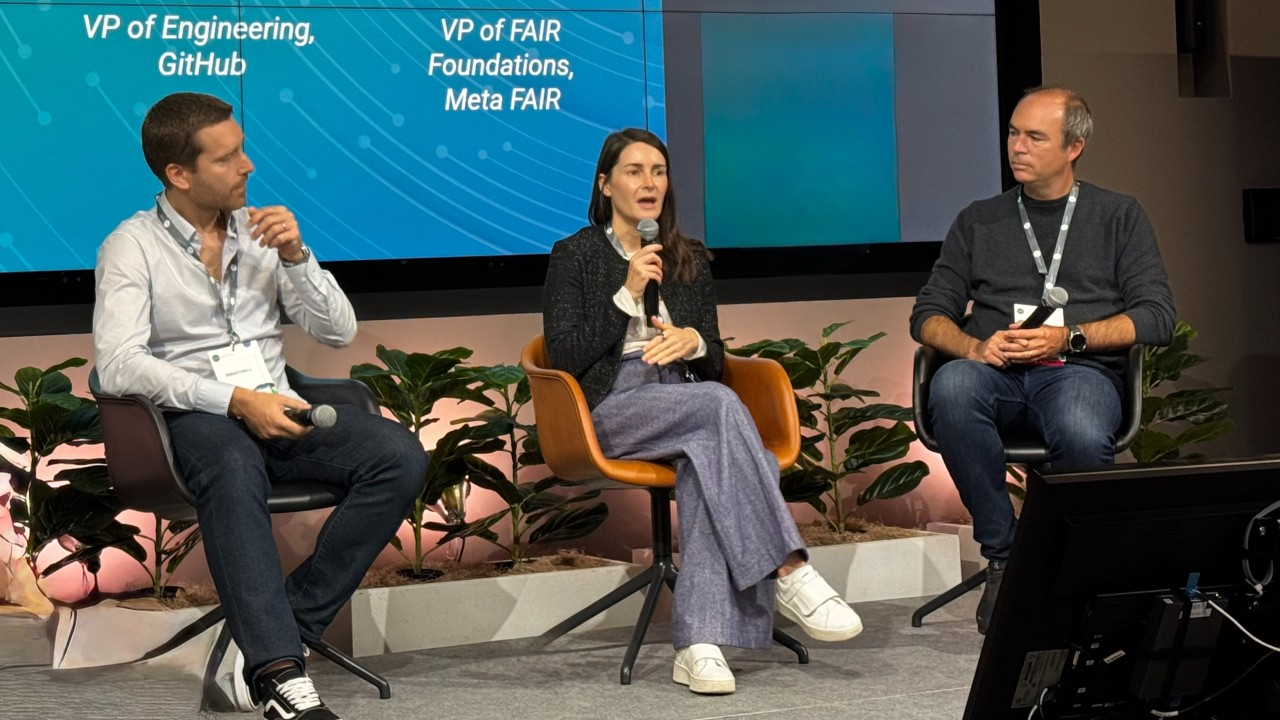
I just came out of the AI Innovators panel at INSEAD’s AI Forum Americas in San Francisco. The message from the stage was clear: The barrier to AI adoption isn’t technology. It’s management.

On stage were:

Gemma Garriga (VP Engineering, GitHub)

Sebastian Bak (Global Co-Lead for AI, BCG X)

Stephane Kasriel (VP FAIR Foundations, Meta FAIR)

All three said it in their own way: the models are ready. The math is cheap. The problem is us.


1. Most budgets are backwards

Sebastian didn’t mince words: “Budget 30% for development and 70% for change management.”

That’s the opposite of how most executives spend today. We still treat AI as an IT project when it’s actually an organizational transformation. Training, incentives, redesigning workflows — this is where adoption lives or dies. Ignore it, and your AI pilot ends up as another shelfware slide deck.

Article content
Most companies focus too heavily on building internal AI-powered tools, without considering the change management resources needed to ensure a successful implementation.

2. CFOs don’t care about your demo

The finance test is simple: show gains in the group that actually adopted your solution. Not promises. Not a POC. Cash in the bank.

If you can’t prove impact at the cohort level, you don’t have a business case — you have theater.


3. Move fast and DON’T break things

Gemma’s reminder: building fast is easy, integrating well is hard. AI projects crash when they move from prototype to production. The fix is discipline: break work into small tasks, measure what the AI touched, track how long it takes code to move from pull request to production. Ship small. Prove safe. Scale.


4. Quick wins and moonshots must coexist

Stephane compared AI to pharma: many bets, many failures, huge costs. The CFO wants a 90-day deliverable that proves value. The board wants a moonshot that reimagines the company in an AI-first world. You need both. Quick wins earn credibility. Moonshots earn the future.


5. Managers need a new job description

Hierarchies slow everything down. In an age of agentic AI, the manager role shifts. Less traffic cop, more architect. Their job: set guardrails, define success metrics, and remove blockers. Not “what did you do this week” but “what did the system learn and ship.”

Article content
AI thrives in flat teams. Hierarchies slow adoption, whereas architects and orchestrators speed it up.

6. Costs are collapsing, but value is elsewhere

The cost of running last year’s top model has already dropped by orders of magnitude. That’s not where the margin is. Value accrues at the solution layer — the companies solving painful, specific problems that users will pay for today. Infrastructure will be cheap. Adoption will not.


Takeaway

Most AI projects don’t fail in the lab. They fail in the org chart.

If you want to win with AI:

• Pick one workflow that matters.

• Prove adoption and cash impact in 90 days.

• Fund change management like you mean it.

• Run one moonshot in parallel.

• Redefine management around learning, not reporting.

The model race makes headlines. The culture race decides who survives.


About the Author:

Daniel Perry is a Silicon Valley-based start-up founder — and advisor to investors, boards & CEOs — connecting sustainability, technology & impact.

AI’s Biggest Challenge Isn’t Compute. It’s Culture.

✨ AI Steps Into the Boardroom: What Diella Means for the Future of Procurement and Beyond

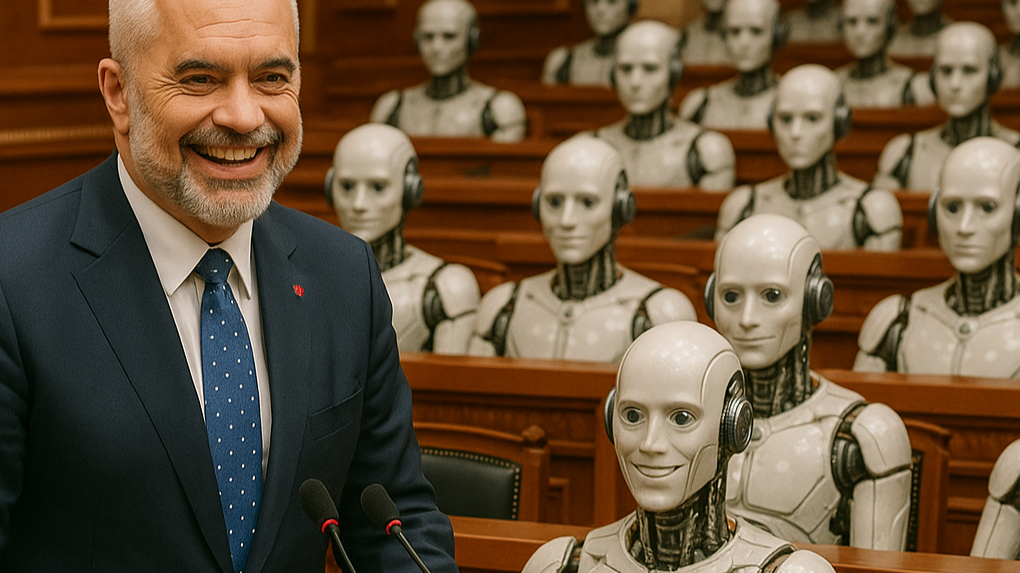
“One day the country could have a digital minister and even an AI prime minister” Edi Rama, Prime Minister of Albania

Albania just made history. It has appointed Diella, an AI‐created virtual minister, to oversee public procurement, a sector that has allegedly been long-accused of corruption and inefficiency.

What are the implications for procurement professionals, and how might this model spread to other bureaucratic roles?

What Diella tells us about procurement’s future

  1. Objectivity & Transparency as Competitive Advantage – By shifting tender evaluations to AI, Albania aims to remove human bias, graft, and conflict of interest. For procurement professionals, this raises the bar: transparency isn’t optional. The value of clean data, well‐documented process, auditability will increasingly define who wins or loses — whether in government or private sector contracts.
  2. Human Oversight Still Is, or Must Be, Critical – Diella isn’t (publicly at least) fully autonomous: questions remain about oversight, manipulation, legal liability.  For procurement leaders, the takeaway is that AI can handle many procedural tasks, but designing how humans remain in the loop, how biases in training data are addressed, how exceptions are managed will be key responsibilities.
  3. Procurement Becomes More Data‐Centric and Technical – Tender evaluation, risk scoring, supplier vetting, contract compliance — these will increasingly rely on algorithms, metrics, dashboards. Procurement professionals will need more fluency in data science, AI governance, process engineering. The role shifts away from paper chasing & negotiation toward strategy, oversight, and design of AI‐mediated systems.
  4. Ethics, Trust & Reputation as Core Capabilities – The biggest risk may not be a technical failure, but rather, a loss of public trust. If an AI “minister” makes decisions that seem opaque, unfair, or wrong, the blowback could be severe. Procurement pros who build systems must embed ethical guardrails, fairness, explainability in their processes.

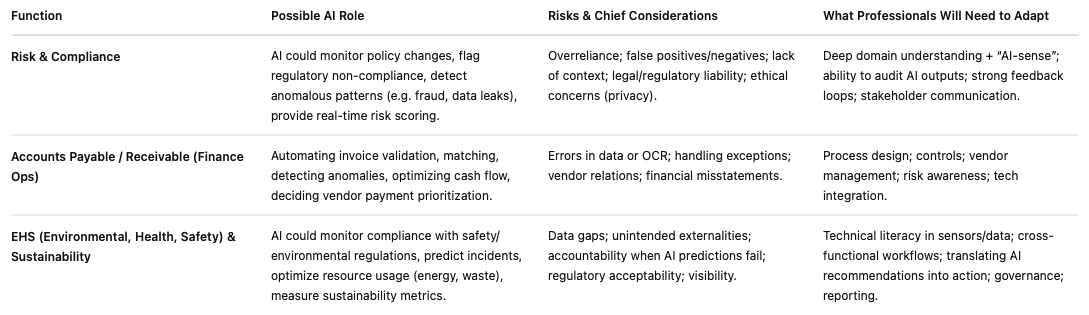
Extrapolating into Other Bureaucratic Roles

Article content
How this paradigm might map onto other functions.

What This Means for Procurement Professionals Right Now

  • Start experimenting with small, auditable, rule-based AI systems in your workflows (vendor scoring, supplier risk, contract compliance) so you understand strengths & pitfalls.
  • Build or sharpen skills in AI governance: fairness, explainability, bias mitigation.
  • Push for transparency: traceable decision logs, ability to contest AI decisions.
  • Engage legal/regulatory teams early: what are the boundaries of delegating authority to AI? What is the liability?
  • Cultivate stakeholder trust: employees, suppliers, customers all need to understand the “why” and “how” of AI decisions. Clear communication + good code.

Final Thought

Diella shows that traditionally slow-to-move organizations, like governments, are willing to hand over complex, rules-based processes to machines. The real work for professionals is deciding how much trust to place in those systems, and where human judgment still needs to apply.

For procurement professionals, that signal should stir both alarm and opportunity. Alarm, because the rules of procurement are being rewritten. Opportunity, because those who master these emerging rules — governance, transparency, data ethics, human-in-the-loop oversight — will set the standard.

For EHS and sustainability professionals, the opportunity is even larger. These are fields where data quality and reporting accuracy can mean the difference between regulatory approval or penalty, safe operations or an accident, credibility or greenwashing.

As AI takes on roles once thought uniquely human, our value will lie less in simply “doing our job” and more in ensuring that when AI does it, it does it better.


About the Author:

Daniel Perry is a Silicon Valley-based start-up founder — and advisor to investors, boards & CEOs — connecting sustainability, technology & impact.

✨ AI Steps Into the Boardroom: What Diella Means for the Future of Procurement and Beyond