
This is a repost from August 14, 2017. Original article can be found here.
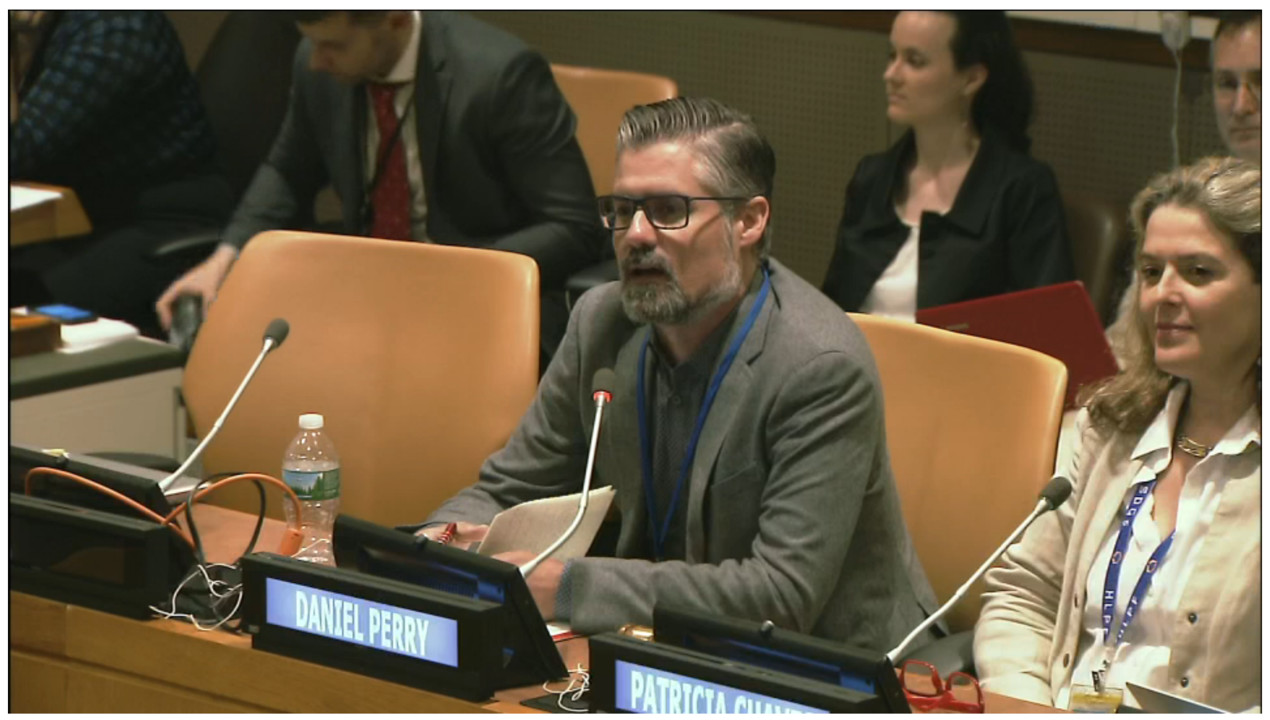
I was honored to have the opportunity to speak at the United Nations Headquarters recently. To be invited into the hallowed halls of the UN, walking past portraits of global leaders and heroes, you get a sense of the seriousness of the institution and the gravity of what is at stake.
Inside what seemed like a “War Room“, with business, government and non-government organizations well represented, the tone was at times fittingly combative.
The day kicked-off with an (unintentionally intense) introduction from Nikhil Seth Executive Director of UNITAR and Paloma Duran Director of the SDG Fund. After cordially introducing the day’s events, the floor was open for a few questions from the attendees, (typically reserved for obligatory house-keeping questions, or a few soft open-ended questions about the state of “international progress”). The invitation for questions resulted in a European government representative challenging the sustainability (and therefore integrity) of the intergovernmental organization’s funding sources, leaving the panelists to calmly refer the attendee to anecdotal evidence of the vetting process for accepting funds from corporations. Good to know, but not exactly the “we can do this” kind of attendee engagement anyone was expecting.
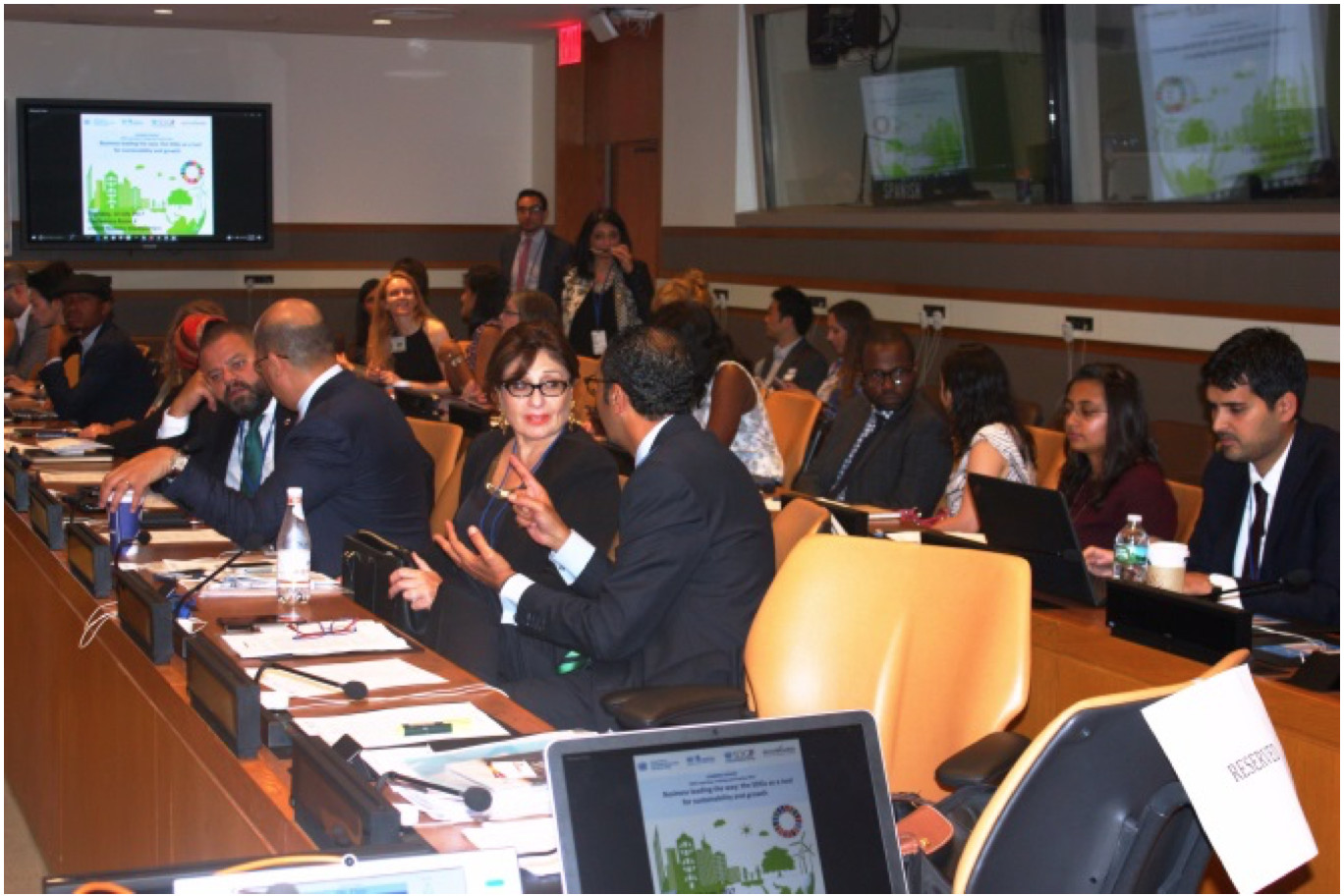
Once the introduction was out of the way, the day seemed to get back on track with a content-filled first training session on implementing and reporting on the SDGs featuring representatives from BSR, Becton Dickinson, PepsiCo Egypt, and International Flavors & Fragrances (IFF).
The moderator for the second session, Stephen J. Donofrio Senior Advisor for Supply Change at Forest Trends Initiative, promised a more interactive session featuring suppliers discussing “how to initiate and sustain internal processes and initiatives”. The panel featured two distinctly different perspectives, with Tonye Cole CEO of the Sahara Group, a large Nigerian private energy company, and Cindy Bush Director of Environmental Health and Safety and Sustainability at Tessy Plastics Corporation, a family owned and operated contract manufacturer headquartered in central New York.
Mid-way through the presentation, it was apparent that doing business in both the energy and the plastics sectors are inherently challenging, with some attendees wasting no time shedding light on some of those challenges – asking how the panelists intend to tackle regional social issues, what they are doing to drive eco-friendly initiatives and how they navigate volatile political climates while maintaining corporate and social integrity.
While Donofrio was able to calmly collate the various (and sometimes lengthy) questions into succinct inquiries that Tonye Cole and Cindy Bush could deftly navigate, it started to seem like the attendees may be left with more questions than answers, and the task of figuring out how businesses can save the world from environmental and social disaster, was at best looking elusive.
Then somewhere near the end of the session, Cindy Bush answered a question which inadvertently provided a master-class in storytelling, while allowing the attendees the opportunity to pivot from “Us & Them” to simply “Us”.
Cindy was asked to comment on a major barrier to businesses leading the way: Large companies are often hesitant to roll-out supply chain sustainability programs because they think small suppliers are either unprepared or unwilling to participate.
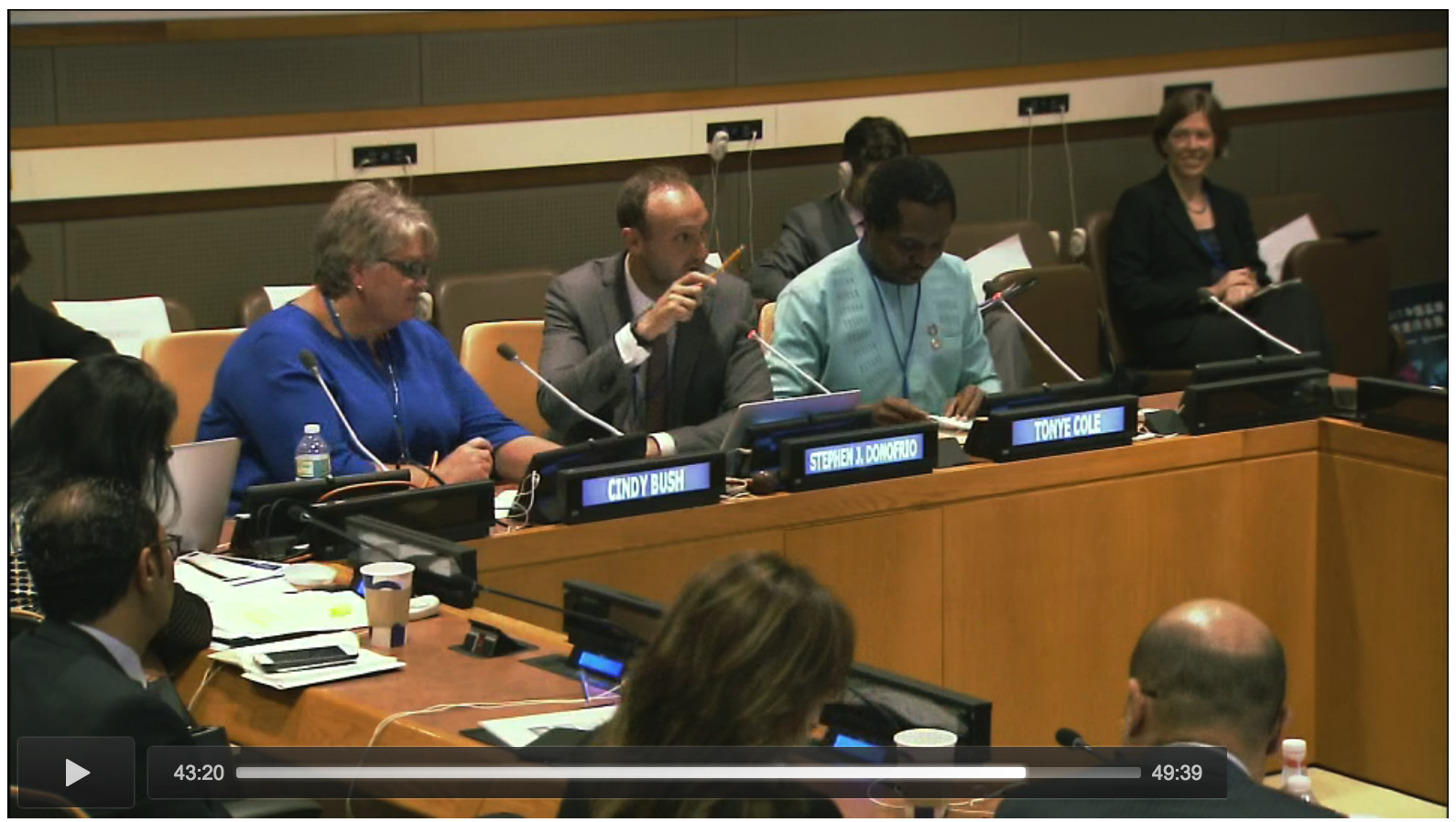
(Skip to timestamp 43:20 to watch Cindy Bush’s compelling response)
“… I really didn’t know what I was doing five years ago… But, failing their survey was one of best things to EVER happen to our company.” – Cindy Bush, Tessy Plastics
What are we talking about?
Cindy started by clearing the air and explaining the topic, “sustainable procurement”, and what it means, as it relates to her customers, “…We’re a tier one supplier for large OEMs, and they have some requirements for their suppliers, (and they articulate them quite well), and our duty, as a supplier, is to try to figure out how to take their aspirations, and put them into practical day-to-day operations and actions.”
Then she clarified what sustainable procurement means in the context of her own supply base, “… because we know what is required and what our customers are asking of us… one of the key things that we’ve learned… is how to take take what’s been required of us, and then turn around and “softly” require it of others… “
Make it Personal
With the topic crystal-clear to everyone, Cindy humanized the challenge faced by many organizations, dispelling any potential cynicism toward her sincerity, by sharing an unguarded moment: “[J&J] gave us the EcoVadis assessment and survey, which has served as a guide-post for the development of our program… I actually find myself getting choked up when I think about it because… I really didn’t know what I was doing five years ago. I told you the truth right? But failing their survey was one of best things to EVER happen to our company.”
Back it up with Data
Many speakers before and after had fantastic data, and solid business cases, but the reason Cindy was so persuasive is that she kept the data in her pocket until the audience was ready. Only once the attendees were fully-engaged, did Cindy hit them with the hard facts. Explaining why failing the assessment was the best thing to ever happen to her company, she continued, “… and here’s how I know it to be true. [At] the same time that we did not do well on our first EcoVadis score, we were only 300,000 square feet, we barely had 400 employees and profit sharing in a quarter was fifty dollars.”
“[Five years on,] now we’re 1.5 million square feet, we deal with some of the largest OEMs in the world, and we have tripled, (if not more), our profitability. All [while] at the same time, (which is not lost on all of you), we kept our eye on the prize – We got real about our responsibilities, we understood how to make and have less impact on the environment, the world, and have a positive impact on our employees.”
The Result
Cindy’s response blew everyone away – In a few short minutes she managed to eloquently demonstrate the important role her customer, Johnson & Johnson, played by inviting Tessy Plastics to participate in a Sustainability Rating program, the significant business benefits Tessy received by participating, the correlation between sustainability and profitability, and the positive flow-on effects corporate social responsibility can have when applied to the context of a multi-tier supply chain.
Cindy’s response was authentic, engaging, and relatable, but it also had the unintended effect of refocusing and uniting the attendees. There was a palpable enthusiasm and freedom to be authentic, which gave attendees and panelists liberty to openly communicate on challenges and successes alike.
In the space of one session, (and arguably the length of one story), the atmosphere had transformed from a combative collective of competing interests, to that of a collaborative group of diverse stakeholders ready to tackle the world’s biggest challenges.
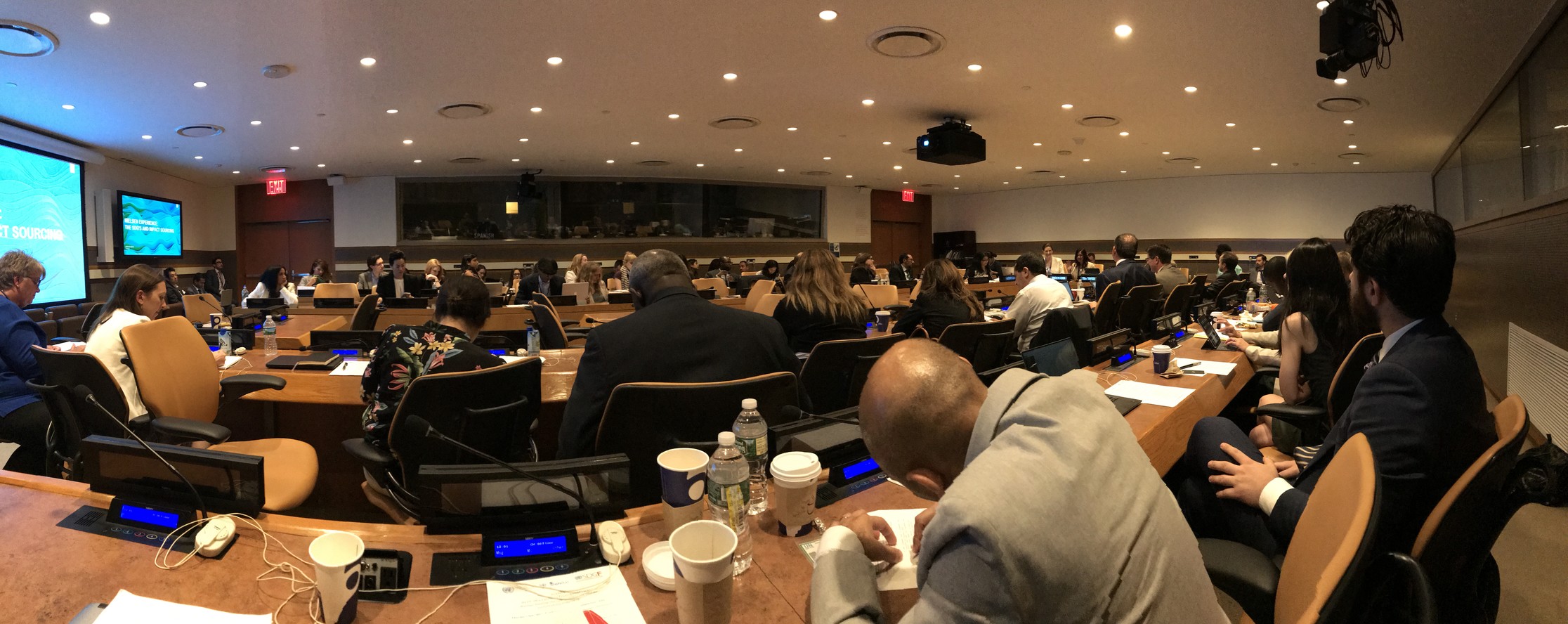
(My view during Training Session 3 SDGs and the role of the Supply Chain)
The following sessions, which flew-by, included broad topics such as Governments Partnering with the Private Sector (Session 4), The SDGs as a compelling tool for ESG reporting and leadership (Session 5), and Tools to Support Communicating SDG Progress (Session 6).
By the time I was called upon to introduce the “Closing – Inspirational Recap” speakers, Evan Harvey Global Head of Sustainability at NASDAQ, Patricia Chaves Senior Sustainable Development Officer at the United Nations Division for Sustainable Development (UNDESA), and myself, it was almost impossible to bring order to the group, as they were (dare I say) having too much “fun”. Maybe that’s a stretch, but there was definitely “collective excitement”, with attendees sharing ideas with their newly acquainted peers. Certainly not a bad level of engagement for 6PM on a weekday, after spending an entire day locked in a bunker.
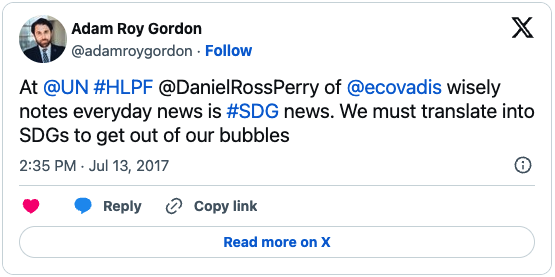
The wrap-up session provided Evan Harvey an opportunity to show why he is a sought-after sustainability thought leader, effortlessly relaying relatable case studies of SDG-inspired sustainability success. Patricia Chaves took the opportunity to challenge the attendees to take the SDGs back to their workplace, stay engaged throughout the coming 12 months, and return with stories of progress. Finally, I challenged the attendees to be “translators” of the SDGs, and was happy to provide an answer to the last tricky question of the day, as it gave me an opportunity to talk about a topic I care about a great deal.
All told, I found this to be a truly inspiring event, thanks in no small part to the story relayed by Cindy Bush, which set off a chain reaction of compelling discussion (that we’ll all be striving to ensure leads to progressive action).
If you’d like more info on the UN SDGs “Business Leading the Way”, you can download the EcoVadis report “How the UN’s SDGs bring Positive Change to Global Businesses”.
 Daniel Ross Perry